Leaking RV Holding Tank, Should You Repair or Replace It?
"Uh-oh, your holding tank is leaking! Nobody wants to hear that, but, it happens"
By Glen Mayo
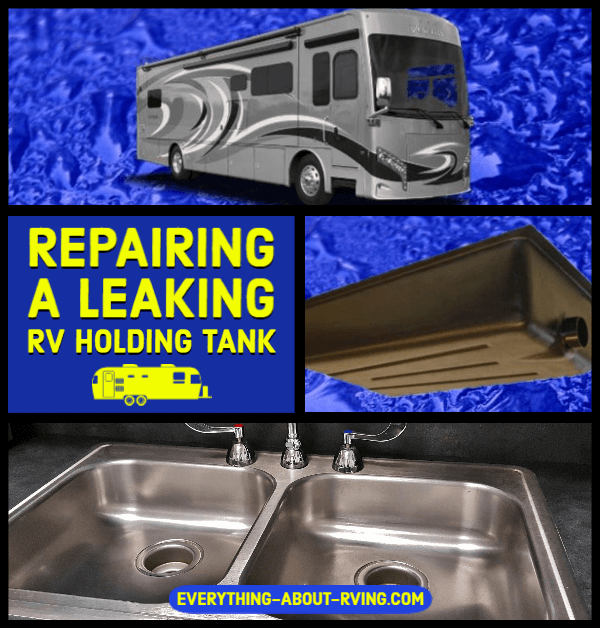
Uh-oh, your holding tank is leaking!
Nobody wants to hear that, but, it happens. Usually at the worst time, like when you are on the road or want to be. But, when it happens, what can you do about it?
Many people believe the only thing you can do is replace the tank. That option can be very expensive – from $300 to $800 or more.
Even worse, it also takes your rig out of commission for a while – maybe several weeks. Tank replacement is an inconvenience for someone who uses their rig occasionally but for the full time RVer it is much more than that.
Another option is repairing the tank.
But, before we get into discussing either option we need to determine what type of plastic your tank is made of.
Some RV and many marine holding tanks are made of Low Density Polyethylene or LDPE. This is the milky white plastic that most fresh water tanks are made of as well as the milky grey plastic that some holding tanks are made of.
Tanks made of ABS are usually thermo-formed and chemical welded. This, along with the fact that they are more popular for use as RV holding tanks, allows a wider diversity of sizes and configurations of tanks.
After determining the type of tank you have, the next step for replacement is finding the tank; whether you or your service center does it. Many suppliers stock standard size tanks with only a few days lead time plus shipping time. If your tank does not fall into this category then your choice is either adapting a tank to fit or having a tank built to order.
If your rig is only 2-3 years old and the rig manufacturer is still in business, you might be able to order the tank from them. This is usually more expensive.
After getting a tank, the old tank is removed. This may require cutting pipes inside the rig as well as removing toilets etc. that fasten into the tank. The new tank would then have the necessary fittings installed to match plumbing locations, be fitted into place and the pipes etc. re-connected. All of this can be labor intensive, resulting in the high cost of replacement.
If you have a leaking tank, look for the cause. If it is inherent weaknesses in the tank causing cracking there is not much can be done to prevent it. But if the problem is due to external damage or stresses, look for a way to prevent re-occurrence of the problem. If the tank is being damaged by dragging, simply adding drag wheels on the rear of your rig may eliminate the problem.
Repairing the tank is an option that should be considered. Some service centers discourage this option for a couple of reasons. The first is, from a service standpoint, it makes more sense to go with the more profitable route of replacement. The second is business risk – if the tank is repaired there is always a possibility the repair will fail, especially if it is not performed correctly. This creates the possibility of a dissatisfied customer and for any business, this is better avoided. If a service center says they cannot repair holding tanks, check at some others. Just remember “cannot” is usually an excuse for not knowing how or not wanting to.
As mentioned earlier, when you find your tank leaking is usually when you want to use your rig and probably when other people want to use theirs. In other words, it is probably when the service center is going to be busy. So either you are going to be waiting or the service center may suggest a “temporary repair” to allow you to use the rig and to put off the replacement until their slow season, therefore banking the work. Since the work is classified as a “temporary repair” this gets the service center off the hook if the repair fails and brings you back in to get the tank replaced when business has slowed down.
One important point if you are taking your unit in for repair. Make sure the tanks are flushed out and clean. Leave the dump valve open and let the tank dry out. Many service centers will not work on the holding tanks if they have not been thoroughly cleaned. Of course, the exception to this is if you are unable to dump and flush the tanks due to a malfunctioning valve, etc. If they do accept it to work on, you are going to get charged extra for the cleaning. Just remember, dumping and cleaning your own tanks is bad enough. If the service center has to take your rig to the dump station, dump it, clean it and maybe wait for it to dry, you are going to be paying for it.
Topical Adhesives – These are generally the two part epoxies that are normally used as a temporary repair. Since there is no adhesive that will permanently bond to LDPE or ABS, they are usually applied to plug a small hole or crack and are used with limited success.
Even with the vast improvement of modern adhesives, they still depend upon their ability to adhere to a surface. So, if the surface is roughened to allow better gripping and if they can be applied where there is little or no flexing, it increases the chance of success.
Since these adhesives are not of the same material as the tank, the difference in temperature expansion/contraction also plays a role in their successful use. Hot water run into a tank on a cold day can cause a major expansion/contraction that will loosen the grip of these adhesives.
Most of the “Tank Repair Kits” that are found on the market are topical adhesives.
Thermal Welding - This is the process of applying heat to melt the plastic together. There are several methods of thermal welding. Each requires different special equipment and some skills in using the equipment, depending upon the extent of repair. For this reason, a limited number of RV service centers offer thermal welding. Some service centers who offer this service do not guarantee it to work but when performed properly it is quite effective. You may be able to find other businesses in your area which also specialize in plastic thermal welding.
There are several simple thermal welding kits on the market for around $200 that can be used quite successfully for small repairs after learning how. This may be a practical repair option for someone with the time and patience to work with it. Even though it is a fourth or half of replacement cost, the welding kit can be used repeatedly.
Thermal welding is the only permanent method of repairing LDPE tanks and can also be used for ABS tanks. One of the problems of thermal welding is it can be labor intensive for anything beyond minor repairs. This can make it quite expensive. This needs to be considered when weighing the option of repair vs. replacement.
Chemical Welding – This is the process of using a chemical that melts the plastic together. The most common example of this is plumbing cement. The plumbing cement melts the plastic of the pipe and fitting together creating a strong bond. Many times a plastic resin is added to the chemical to give extra sealing body to the joint.
Chemical welding works very well with ABS as a quick and permanent repair. Since most RV holding tanks are ABS, chemical welding is the most economical and efficient means of repair. It will not work on LDPE since LDPE is practically impervious to most chemicals.
One of the advantages to chemical welding is the flexibility and ease of application. If you can reach the area with a paintbrush, you can repair it. It can be used with any size crack or hole and over large areas to strengthen the tank.
Another is, the tank can be put back into use within hours. If you are a full timer or waiting to use your rig this can be a big advantage.
One of the problems with chemical welding is the chemical itself. These are usually solvents which are either flammable and/or hazardous to your health if used incorrectly.
However, when used properly, these products pose no more of a threat than other household chemicals used in everyday life. The solvents are some of the same that are used in some paints, paint strippers, many cleaners and adhesives and even fingernail polish remover.
Many times, plumbing cement is used to repair a tank with some success. The problem is, plumbing cement does not have the solvent and plastic mixture designed for topical application so it may not create an efficient bond.
There is a new product on the market designed specifically for ABS holding tank repair by chemical welding. Plasti-Mend Black is a brush on plastic resin compound, made of a special blend of solvents and plastic resins, which melts into and bonds with the original plastic, leaving a new layer of ABS plastic bonded to the repaired area. It can be used on cracks or holes of any size as well as larger repairs such as re-fastening valve assemblies that have been torn out of the tank. When applied correctly, the repaired article is stronger than new.
The major cause of failure for any type of tank repair is lack of cleaning and not prepping the tank properly. Make sure to follow the manufacturer’s instructions for prep and application for the product you are using.
So, the next time you look under your rig and see your holding tank dripping, consider some of your options. Don’t just give up to replacing it when you may be able to repair it for a fraction of the cost.
Take a look at the video below to see how to properly use Plasti-Mend.
Save 50% Off Campsites with Passport America
About The Author
Glen Mayo was an RV tech, shop foreman and service manager for about fifteen years. He owned and ran an RV service facility for about five years. He has remodeled and custom built a number of rigs. “I don’t remember the houses I lived in as a boy but I can remember most of the RVs my family had. One of the first RVs I remember my family having was a Masonite sided travel trailer. RV’s have always been a part of my life.”
For more information on Plasti-Mend products visit the website at www.plasti-mend.com or if you have questions send an e-mail to sales@plasti-mend.com
You might like these
How to Plug RV Into House Electric
Here are steps you need to take to safely plug your RV into your homes electrical system
Keeping Your RV Rodent and Insect Free During Storage
Here are some helpful tips for keeping your RV rodent and insect free during storage
Winterizing Your RV: Essential Steps & Tips
Nothing can ruin your cheery spring mood by having to spend money repairing the pipes in your RV. Learn the steps for winterizing your RV the right way.


Do you have any suggestions or comments on this topic? You can add them to this page by using the comments section located below.
Return to the RV Lifestyle Articles page from the Leaking RV Holding Tank, Should You Repair or Replace It page